


Artikel: Single Ikat vs Double Ikat Patola: A Complete Buyer’s Guide
Single Ikat vs Double Ikat Patola: A Complete Buyer’s Guide
Quick answer: Single Ikat Patola is woven with one resist-dyed set of yarns, while Double Ikat Patola is woven with both warp and weft yarns resist-dyed to the planned pattern. Rajkot is especially associated with Single Ikat Patola; Patan is internationally known for the far more complex Double Ikat tradition.
Both are important expressions of Gujarat’s textile heritage, but they differ in technique, time, visual precision, price and collecting value. This guide from Sindhoi Patola Art explains those differences so you can choose with confidence.
Single Ikat vs Double Ikat Patola at a Glance
| Feature | Single Ikat Patola | Double Ikat Patola |
|---|---|---|
| Yarns resist-dyed before weaving | One set: warp or weft | Both warp and weft |
| Gujarat association | Rajkot Patola | Patan Patola |
| Weaving complexity | Highly skilled handloom work | Exceptionally complex alignment of two patterned yarn systems |
| Pattern formation | Pattern develops from one dyed yarn direction | Pattern emerges where dyed warp and weft align |
| Typical price level | More accessible | Higher because of time, precision and specialist labour |
| Best suited for | Festive wear, weddings and regular heritage dressing | Bridal trousseaux, heirloom purchases and textile collections |
What Is Single Ikat Rajkot Patola?
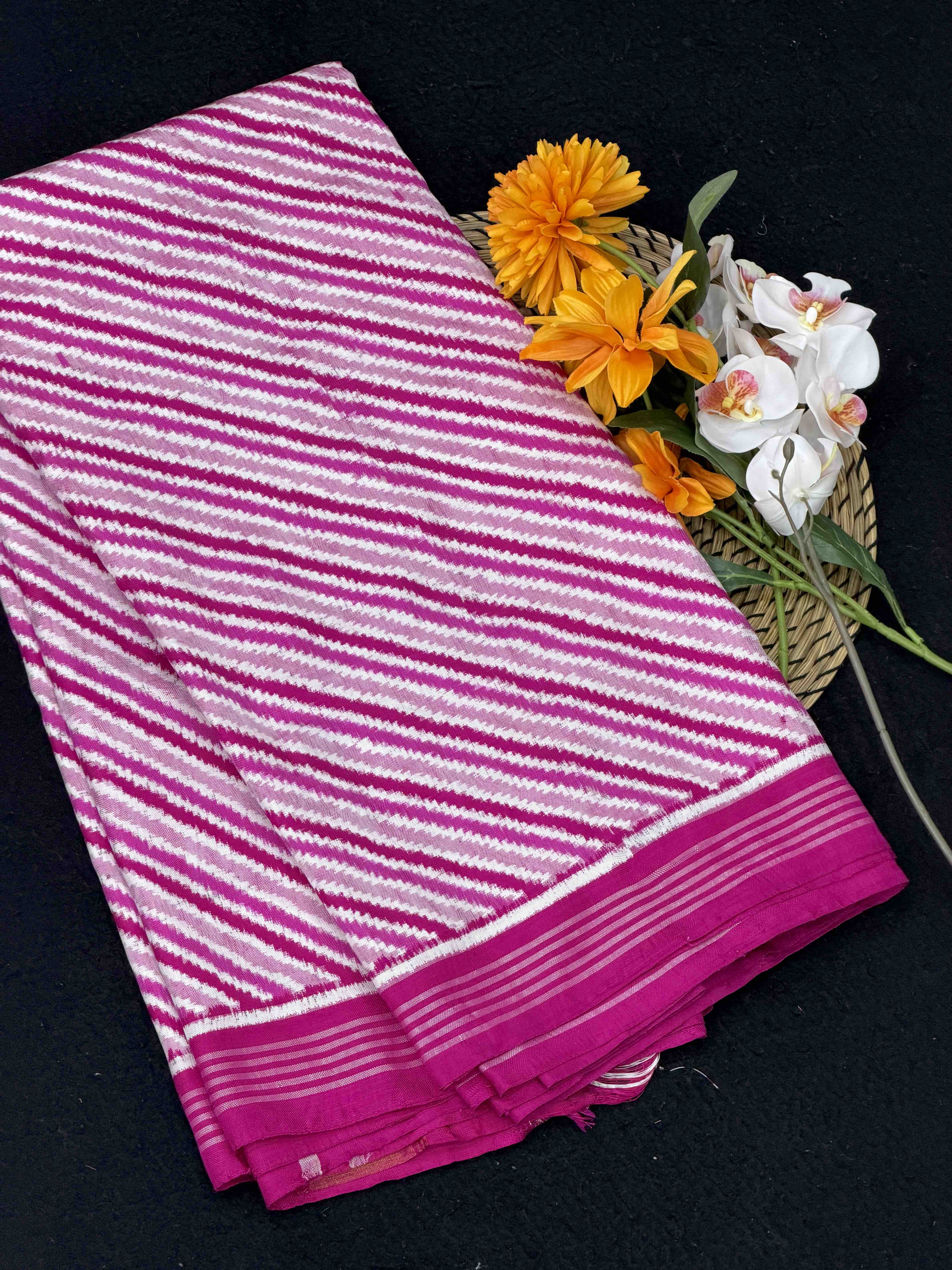
In Single Ikat, either the warp or the weft yarns are tied and resist-dyed according to the intended design before weaving begins. Rajkot Patola commonly uses the warp-ikat method. As the prepared yarns are woven with the second, undyed or differently coloured yarn system, the motifs appear across the fabric.
The method still requires careful planning, repeated tying and dyeing, and skilled handloom weaving. It is especially suited to lively geometric, floral, bird and traditional Gujarat motifs such as Navratan, Narikunj, Manekchowk and Panchanda.
Single Ikat Patola is often chosen by buyers who want an authentic handwoven silk saree with Patola character at a more accessible price than Double Ikat. Browse our Single Ikat Rajkot Patola sarees and Single Ikat Patola dupattas.
What Is Double Ikat Patan Patola?
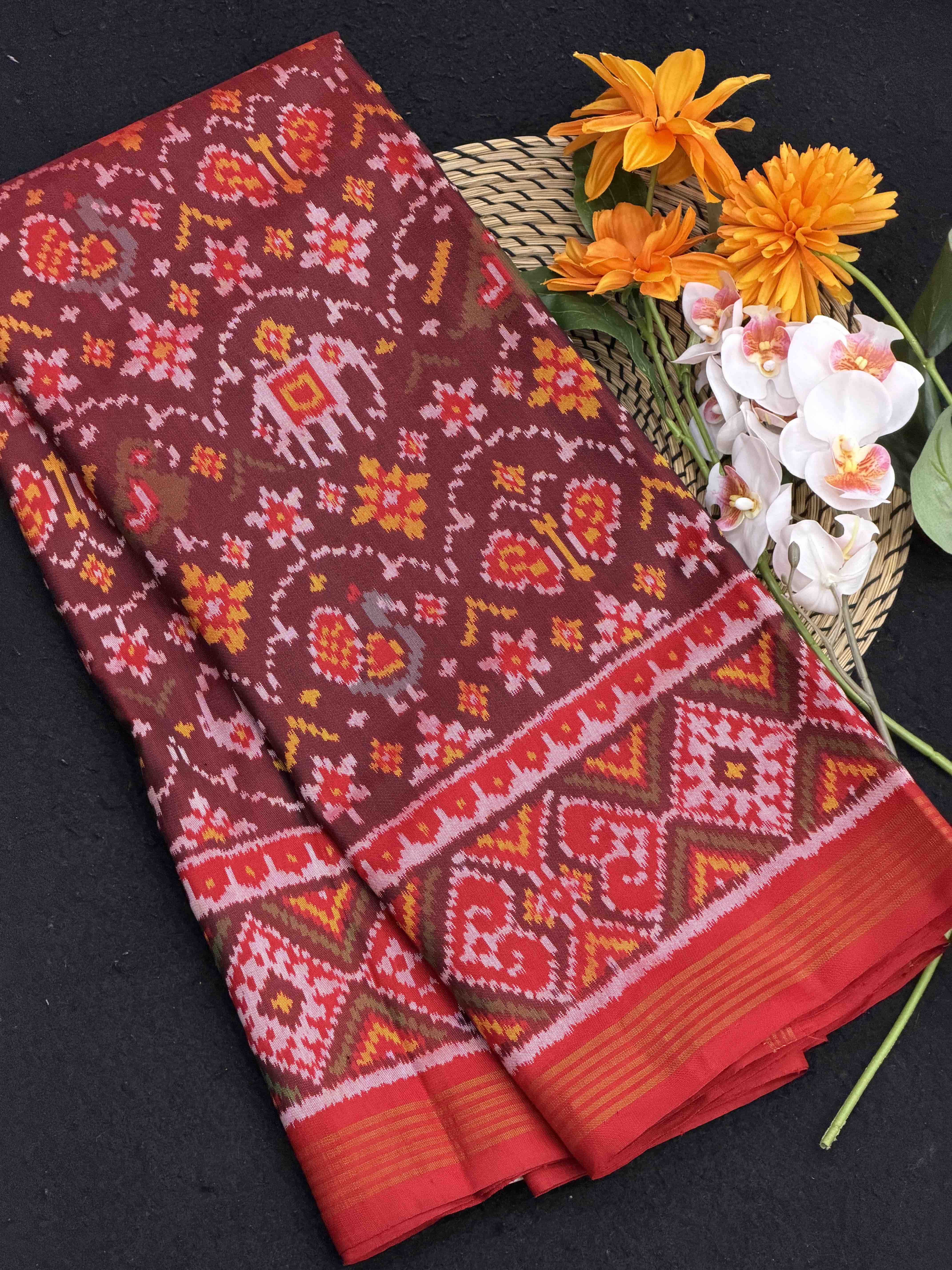
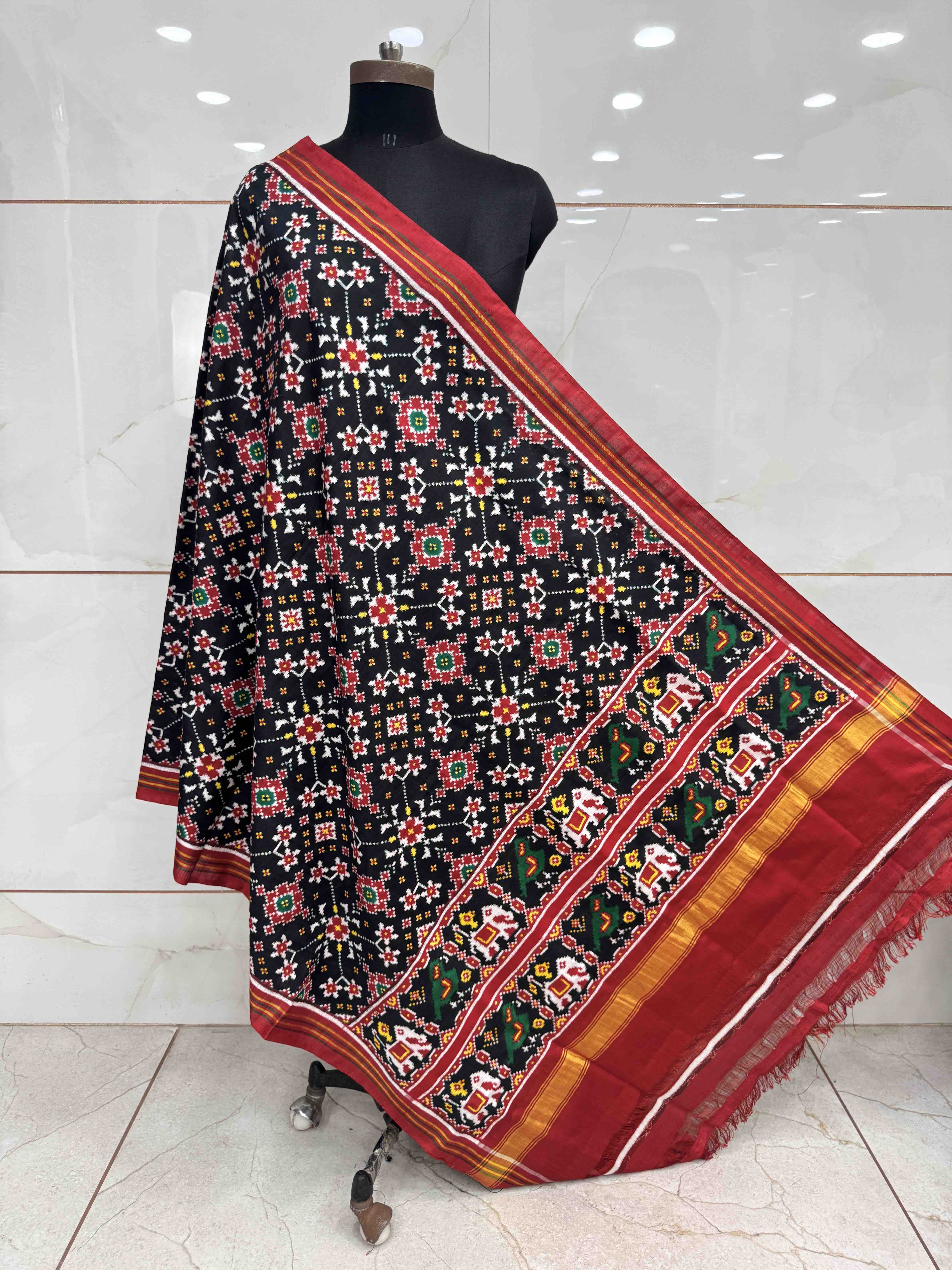
Double Ikat begins with a more demanding plan: both the warp yarns and the weft yarns are tied and resist-dyed before either set is placed on the loom. During weaving, the artisan must align the pre-dyed areas of both yarn systems so that the planned motif appears at their intersections.
This alignment is what gives Double Ikat Patola its celebrated precision and its closely corresponding visual character on both sides. Complex designs can require many stages of tying, dyeing, checking and minute adjustment on the loom.
Because the technique involves two patterned yarn systems, specialist knowledge and substantially more time, Double Ikat Patan Patola is generally more expensive. It is often purchased for weddings, bridal trousseaux, family heirlooms and serious textile collections. Explore our Double Ikat Patan Patola sarees and Double Ikat Patola dupattas.
Is Patan Patola GI-Certified?
Patan Patola is protected as a geographical indication associated with its place, tradition and production standards. A buyer should distinguish a qualifying Patan Patola product from textiles that merely use “Patola-style” prints or motifs.
Single Ikat Rajkot Patola is a separate and respected Gujarat weaving tradition. It should be described accurately as Rajkot Patola or Single Ikat Patola rather than being presented as Double Ikat Patan Patola. At Sindhoi Patola Art, GI-certified pieces are identified in the relevant product information; contact our team if you want to confirm certification for a specific saree or dupatta.
How Can You Recognise Handwoven Patola?
- Read the technique: The listing should clearly state Single Ikat, Double Ikat, handwoven or printed.
- Check the material: Pure silk, silk blends and other materials should be identified rather than assumed.
- Look closely at the motif: In ikat, the design is formed through dyed yarns, not added as a surface print after weaving.
- Inspect both sides: Handwoven ikat patterns carry through the textile, although the exact appearance depends on the technique and finishing.
- Ask for provenance: A knowledgeable seller should be able to explain where and how the piece was made.
- Request a video: Video shopping makes it easier to view colour, drape, pallu, border and motif alignment before purchase.
Which Patola Should You Buy?
Choose a Single Ikat Rajkot Patola when you want a handwoven heritage saree for weddings, festivals and frequent special-occasion wear, with a broad choice of colours and motifs at a comparatively accessible price.
Choose a Double Ikat Patan Patola when rarity, technical complexity, provenance and heirloom value are your priorities. It is particularly meaningful for a bridal trousseau, milestone gift or serious collection.
Neither choice is “better” for every buyer. The right piece depends on your occasion, design preference, budget and the story you want the textile to carry.
How to Care for Patola Silk
- Follow the care instructions provided with the individual product.
- Dry clean silk Patola unless the specific listing states otherwise.
- Store the textile clean and completely dry in breathable cotton or muslin.
- Avoid plastic storage for long periods and protect it from moisture and direct sunlight.
- Refold the saree periodically so permanent creases do not develop along the same lines.
- Keep perfume, deodorant and harsh chemicals away from the silk.
About Sindhoi Patola Art
Sindhoi Patola Art is a family-led handloom brand founded in Rajkot in 1989 by Patola weaver Bhalabhai Devjibhai Parmar. Tarun Parmar joined the business in 2010 and helped bring its collections to customers online. The brand works with artisan families, has stores in Rajkot and Ahmedabad, offers WhatsApp video shopping and ships worldwide.
For help selecting between Single and Double Ikat, contact us through the Sindhoi Patola Art contact page or WhatsApp +91 95101 11976.
Frequently Asked Questions
Does Double Ikat always look exactly identical on both sides?
The motif and colour relationship is visible on both sides because it is created through dyed yarns rather than a one-sided surface print. Minor differences can result from weaving structure and finishing, so “identical” should not be treated as the only test of authenticity.
Are all Patola sarees made with natural dyes?
No. Dye type varies by maker and product. Buyers should rely on the specific product description or ask the seller rather than assuming every Patola uses natural dyes.
Why is Double Ikat Patan Patola expensive?
Both yarn systems must be planned, tied, dyed and aligned with high precision before and during weaving. The time, specialist skill, low output and heritage value contribute to its price.
Can I buy Patola from outside India?
Yes. Sindhoi Patola Art ships internationally and offers WhatsApp video consultations to help overseas buyers examine a piece before ordering.

Von Tarun Parmar
Hinterlasse einen Kommentar
Diese Website ist durch hCaptcha geschützt und es gelten die allgemeinen Geschäftsbedingungen und Datenschutzbestimmungen von hCaptcha.